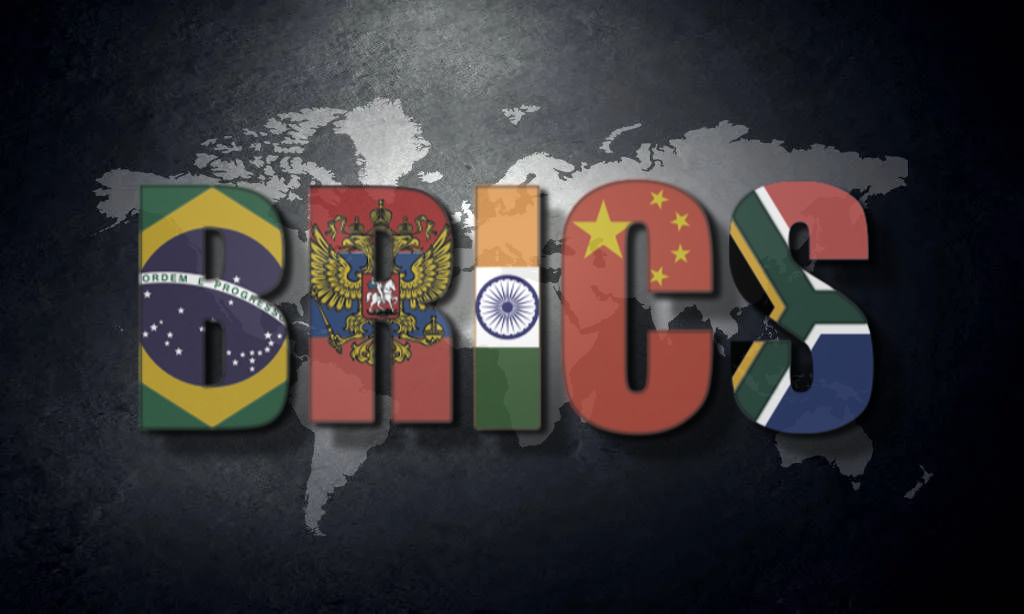
The recent announcement of a separate BRICS currency has sparked discussions about its potential impact on the global financial landscape. While some view this move as a significant achievement, skepticism remains regarding its feasibility, given the conflicting interests and ideologies within the group. This post explores the complexities and doubts surrounding BRICS' currency ambitions.
The news of BRICS’ separate currency has hit the common people as a great achievement of the recently concluded BRICS Summit in Kazan, Russia. In a recent discussion among peers who had little knowledge about BRICS, they commended India’s great achievement in declaring a separate currency for the BRICS member countries to make a formidable challenge to the US dollar. However, from my own understanding, the declaration is simply a gimmick with a remote possibility, or rather an impossible event to happen in reality.
In the 1960s, during the active Cold War between NATO, headed by the USA, and the Warsaw Pact, headed by the Soviet Union, the pioneers of the Non-Aligned Movement, India represented by Shri Jawahar Lal Nehru, the then Prime Minister of India, the Yugoslavian President Mr. Josip Broz Tito, and Egypt’s President Gamal Abdel Nasser formed a group of countries non-aligned to either NATO or the Warsaw Pact. The movement was an effort to counterbalance the bipolarization of the world during the Cold War. The Non-Aligned Movement was participated in by about 120 countries with the purpose of ensuring “the national independence, sovereignty, territorial integrity, and security of non-aligned countries” in their “struggle against imperialism, colonialism, neo-colonialism, racism, and all forms of foreign aggression, occupation, domination, interference or hegemony, as well as against great power and bloc politics.”
What happened to NAM? The founding member Yugoslavia disintegrated, and India and Pakistan, both members of NAM, entered into wars; Iran and Iraq, both members of NAM, went to war. India lost interest in NAM. What ended the fate of the movement? The movement is now not in a state better than a coma.
BRICS, in its original form or in its extended form as of now, is an association of countries with conflicting interests and ideologies. India believes in peace and peaceful coexistence with neighboring countries without conflict. But Russia, in contrast, believes in aggression and war with its neighbors. There is a complete absence of ideological alignment between the two. China, a neighbor with close ties to and inclination toward Pakistan, which is a natural and proven enemy of India, also lacks ideological alignment with India. India has a close partnership with Israel in defense and technology. Iran, which has been inducted as a new member of BRICS, is at war with Israel. Saudi Arabia has also been inducted as a new entrant to BRICS, and these two countries are again enemies of each other. Iran is at war with the USA, while Saudi Arabia has close defense ties with the USA. Where is the ideological alignment between Iran and Saudi Arabia? Again, Saudi Arabia has military ties with Pakistan, which is a natural enemy of India, and yet Saudi Arabia is a member of BRICS alongside India.
BRICS is therefore an association of countries characterized by conflicting interests without any ideological alliance or alignment. It is nothing but a marriage of convenience or opportunism without any sincerity in achieving the declared goals. So the declaration of a common currency to counter and challenge the dominance of the US dollar is nothing but confusing propaganda. The intent of India in a common BRICS currency to counter the US dollar is not beyond suspicion. All domestically produced energy resources, such as crude oil, natural gas, oil refinery products, petroleum, LPG, SKO, and diesel, are sold in US dollars in the domestic market in India. Even domestically produced urea is purchased by the government in US dollars. When the Government of India is not interested in selling domestically produced products to domestic customers in Indian legal currency (rupees), but insists on selling them in US dollars, there is doubt about the sincerity of the government in promoting a currency to counter the dominance of the US dollar. The government is heavily taxing the public exchequer by forcing Indian citizens to buy oil, gas, petroleum products, and fertilizer like urea in US dollars.
For economic reasons, India cannot afford to be in conflict with the USA, Israel, and other Western countries. A joint declaration with BRICS, which is nothing but an association of countries with conflicting ideologies and interests, to have a separate currency is impractical and a myth.

 Innate Impressions
Leave a comment