Original:
Latest Version:
India has a longstanding tradition of raising its voice against injustice, intolerance, and human rights abuses, regardless of race, faith, religion, or location. The people of India have historically stood for humanity, opposing discrimination and oppression, such as the fight against apartheid in South Africa under Nelson Mandela, supporting the Palestinian cause under Yasser Arafat, standing with Vietnam under Ho Chi Minh, and protesting the invasion of Iraq led by Saddam Hussein, among other instances. However, with the advancement of our knowledge, education, and economic development, we have become increasingly indifferent, self-centered, and unwilling to speak up for humanity. We have become silent about human rights violations against those from whom we do not perceive any political or economic benefit.
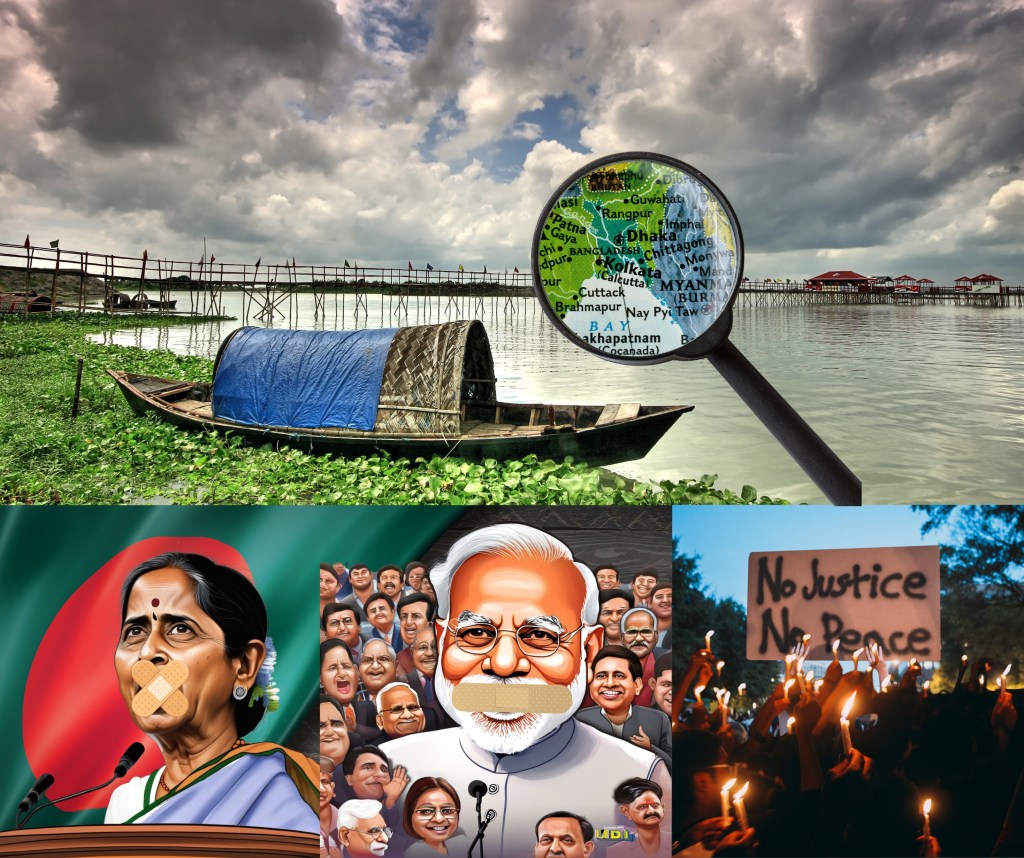
We raise our voices against Israel’s actions in Palestine, thousands of kilometers away, yet remain shamelessly silent about the persecution and killing of Hindus in our neighboring country, Bangladesh. When civil society and activists spent sleepless nights protesting the murder of a doctor in Kolkata, they failed to issue even a single statement against the inhumane treatment of Hindus in Bangladesh. Political leaders in Bengal, who advocate for Hindu causes and call for the resignation of the Chief Minister for the doctor’s death, have not spoken up against the injustices faced by Hindus in Bangladesh. At least three ministers who won elections based on Hindu issues and now represent Bengal in the Central Government have raised their voices against the murder of the doctor, yet remain conspicuously silent on the oppression of Hindus in Bangladesh.
The Leader of the Opposition at the Centre, a staunch advocate of religious harmony, does not speak up against the persecution of Hindus in Bangladesh. The Chief Minister of West Bengal, often seen performing both Muslim and Hindu religious practices, has not issued a single statement condemning the atrocities against Hindus in Bangladesh. Similarly, the communists in Bengal and leaders of MIM or ISF, who typically stand against minority oppression, are silent about the human rights abuses faced by Hindus in Bangladesh. Islamic scholars in India, who are vocal on issues like the minority status of AMU or WAQF Board, also remain silent.
The apathy of political leaders across the ideological spectrum, intellectuals, and social activists in Bengal and across the country reveals a tragic loss of humanity and the ability to stand against injustice. These actions—or lack thereof—underscore a troubling decline in empathy and a deep-seated moral bankruptcy among the nation’s leaders.

 Innate Impressions
Leave a comment